In this activity, students read an excerpt from Harriet Beecher Stowe’s novel, Uncle Tom’s Cabin, and answer related questions.
Semicolon and Independent Clauses

Let’s substitute a semicolon for a coordinating conjunction!
Semicolons and Commas with Conjunctive Adverbs
Here’s some semicolon practice with using them with conjunctive adverbs.
Setting the Scene: Great Expectations
In this worksheet, your student will analyze the setting in a scene from Dickens’ “Great Expectations.”
Shakespeare’s Henry V: Once More Unto the Breach
In this activity, your students will read an excerpt from “Shakespeare’s Henry V” and answer questions related to the topic.
Shakespeare’s Macbeth Reading Comprehension
Help your students improve their reading comprehension with this “Shakespeare’s Macbeth” activity.
Shakespeare’s The Merchant of Venice: Portia’s Speech

Encourage your students in their reading comprehension skills with this “Shakespeare’s Merchant of Venice” printable activity.
Simplifying Washington’s Language: Historic to Modern
Students read from the first State of The Union address and re-write a portion using modren language.
Tension in The Pit and the Pendulum
Here’s a worksheet on how Poe’s uses structure to create tension in “The Pit and the Pendulum.”
Two Viewpoints: Lee Surrenders to Grant, 1865
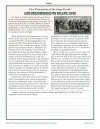
In this worksheet, your student will compare the writings of Ulysses S. Grant with a painting of the surrender of Lee at Appomattox Court House.
Using Inference in Writing
Your student will take the next step in understanding inference in this writing worksheet.
Using the Colon
There are lots of reasons to use a colon!
What Can You Infer?
This inference worksheet spotlights text from “The Gift of the Magi.”
What Kind of Dependent Clause Is It?
Your student is asked to name the function of the dependent clause in this worksheet.
Word Pairs: Choose the Correct Word
The vocabulary is more advanced in this confusing word pairs worksheet. Students will practice with word pairs like elicit/illicit, discreet/discrete and more.
Write a Conclusion: Voting
A strongly written conclusion can sway a reader one way or another. When writing persuasive articles it is important that you restate your thesis and give strong supporting ideas. The conclusion is the last chance you will have to sway your readers. This free printable worksheet is perfect for students to practice writing conclusions.
Writing Practice: Quotation Marks
This writing practice asks your student to create sentences using quotation marks.
Writing with Commonly Confused Words
Now your student gets a chance to write with some easily confused words! Students practice with words like conscious, conscientious, antidote, and anecdote.